
Sustainable Packaging Design Tips for Brands Going Eco-Friendly
- Tania Haldar

- Aug 21, 2025
- 2 min read

Introduction
Sustainability is no longer just a buzzword — it’s a consumer expectation. Today’s customers actively look for products packaged in ways that align with their environmental values. By following **sustainable packaging design tips**, your brand can reduce environmental impact, attract eco-conscious buyers, and strengthen its overall identity.
1. Start with Recycled Materials

Choosing recycled materials for your packaging is one of the most direct ways to reduce your brand’s environmental footprint. Options include:
Post-consumer recycled paper and cardboard
Recycled plastics (PET, HDPE)
Upcycled textiles for product wraps or bags
These materials not only minimise waste but also resonate with customers who appreciate conscious business practices. Learn more in our Eco-Friendly Packaging Solutions guide.
2. Opt for Recyclable Packaging
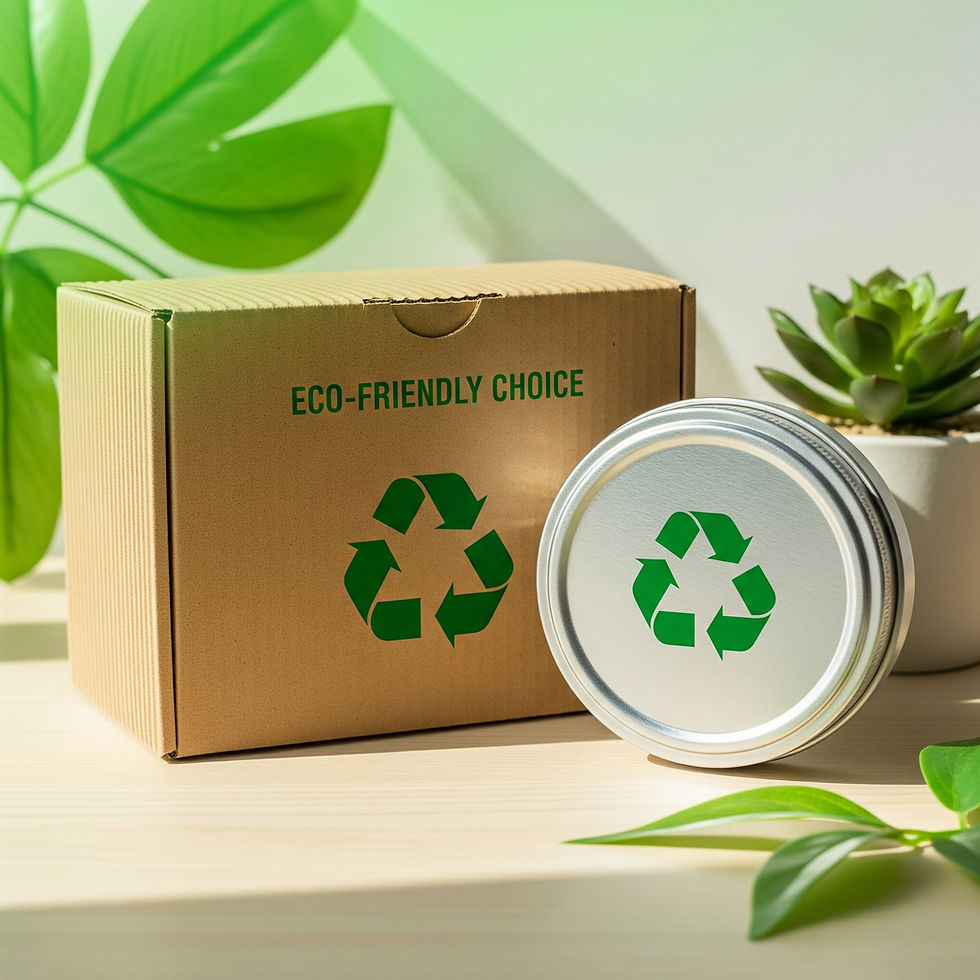
Recyclable materials give packaging a second life instead of sending it to landfills. Common recyclable packaging options include:
Corrugated cardboard
Certain plastics (check local recycling codes)
Glass jars and bottles
Aluminum tins
Always make recycling instructions visible on your packaging to guide customers toward responsible disposal.
3. Use Biodegradable and Compostable Options

For products where recycling isn’t practical, biodegradable or compostable materials are a great choice. Examples:
Plant-based plastics (PLA)
Compostable mailers
Uncoated paper or kraft board
These materials break down naturally, helping reduce long-term waste.
4. Keep Design Minimal and Efficient

The best sustainable packaging often uses less material overall. Design considerations include:
Right-sizing boxes to fit products snugly
Avoiding unnecessary layers or fillers
Printing directly on packaging instead of using separate labels
Minimal design not only reduces material waste but also creates a clean, modern brand look.
5. Tell Your Sustainability Story

If you’ve invested in sustainable packaging, let your customers know. Add small design elements such as:
Icons indicating “100% Recycled,” “Compostable,” or “Recyclable”
Short messages about your environmental commitment
QR codes linking to your sustainability page
For example, our Brand Consulting Services can help integrate your eco-friendly values into your full brand messaging.
6. Ensure Brand Consistency
Sustainable packaging should still reflect your brand identity. Use your consistent colour palette, typography, and logo placement so customers recognise your brand instantly — even when you switch to greener materials. Our Boutique Design Studio can help ensure your eco-friendly packaging matches your overall branding.
Conclusion

Implementing sustainable packaging design tips doesn’t just help the planet — it helps your business connect with the growing number of eco-conscious consumers. Whether you choose recycled, recyclable, or biodegradable materials, the key is aligning your packaging design with both your brand values and customer expectations.
By making small but impactful changes, your packaging can be a powerful reflection of your commitment to a greener future.
---